Positioning
01
L1+L5
Two frequencies, one fix. The second civil band rejects the multipath a rock wall throws back at a single-band receiver, so the track logged inside a couloir is the line that was actually climbed.
Built for extremes. Made to elevate.
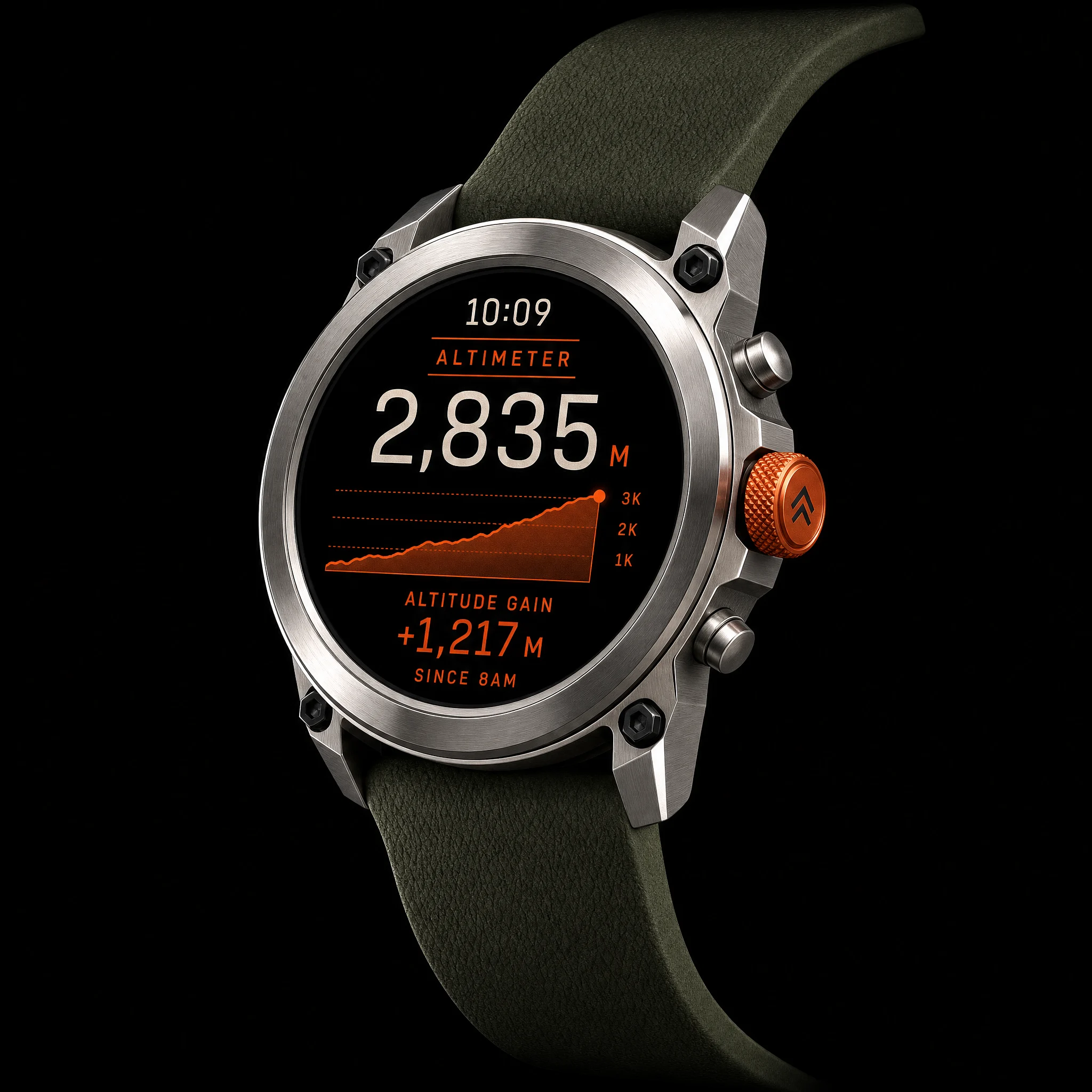
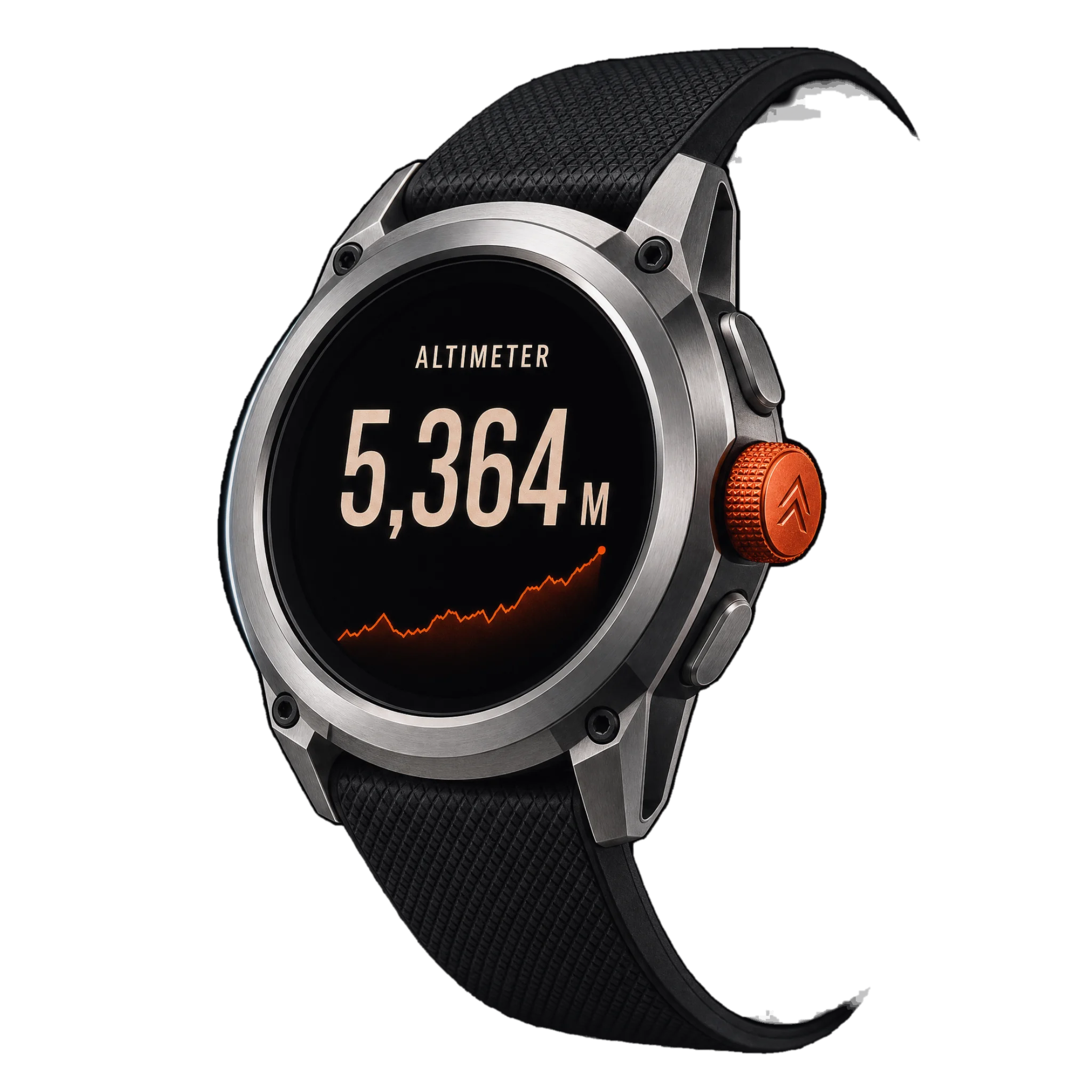
The altimeter never blinks. A grade-5 titanium chassis, sapphire crystal and dual-frequency GNSS keep their fix in the thin air above the last camp — where ordinary instruments stop reporting.
Spec sheet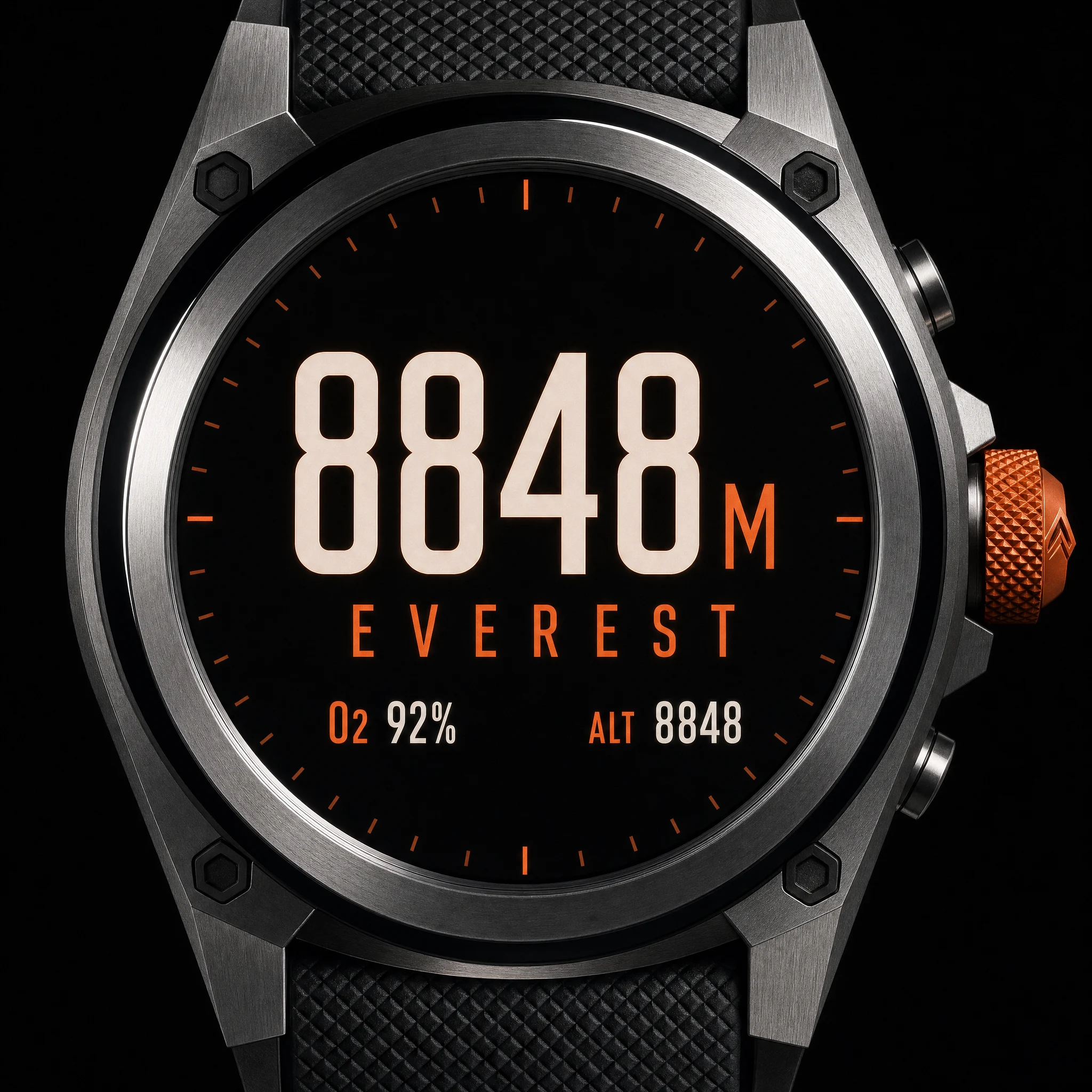 Grade-5 titaniumEmber crown
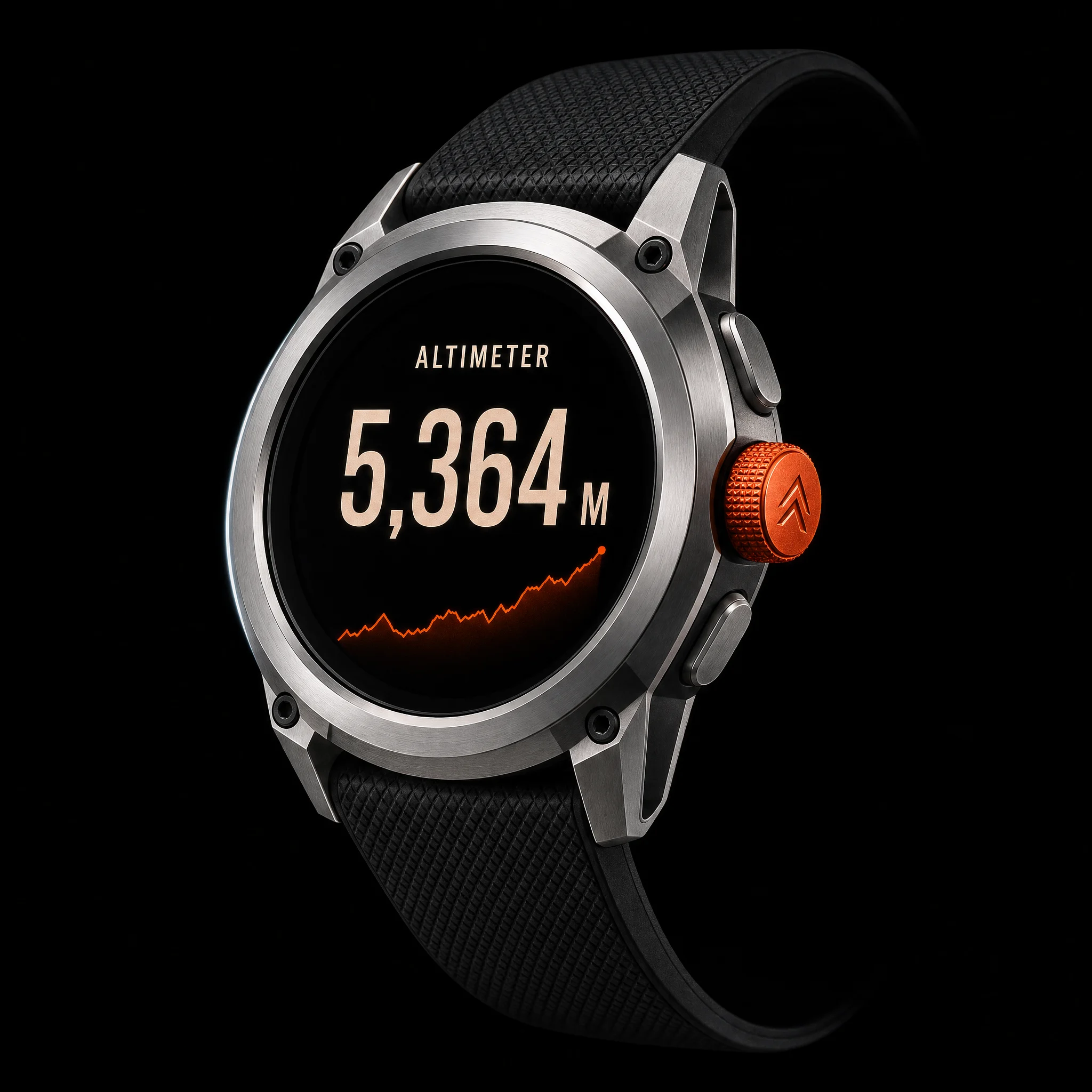
The dial gives one number priority. A 35 mm sapphire face carries the altimeter at 480 nits and pushes every secondary readout out to the rim, so the figure that decides whether you keep climbing is the first one you see.
The crown is knurled, not textured. Twelve detents give a click you can feel through a down mitt, and a screw-down collar seals the case to 10 ATM, so the mechanism keeps its bearing after a night at −41 °C.
Case construction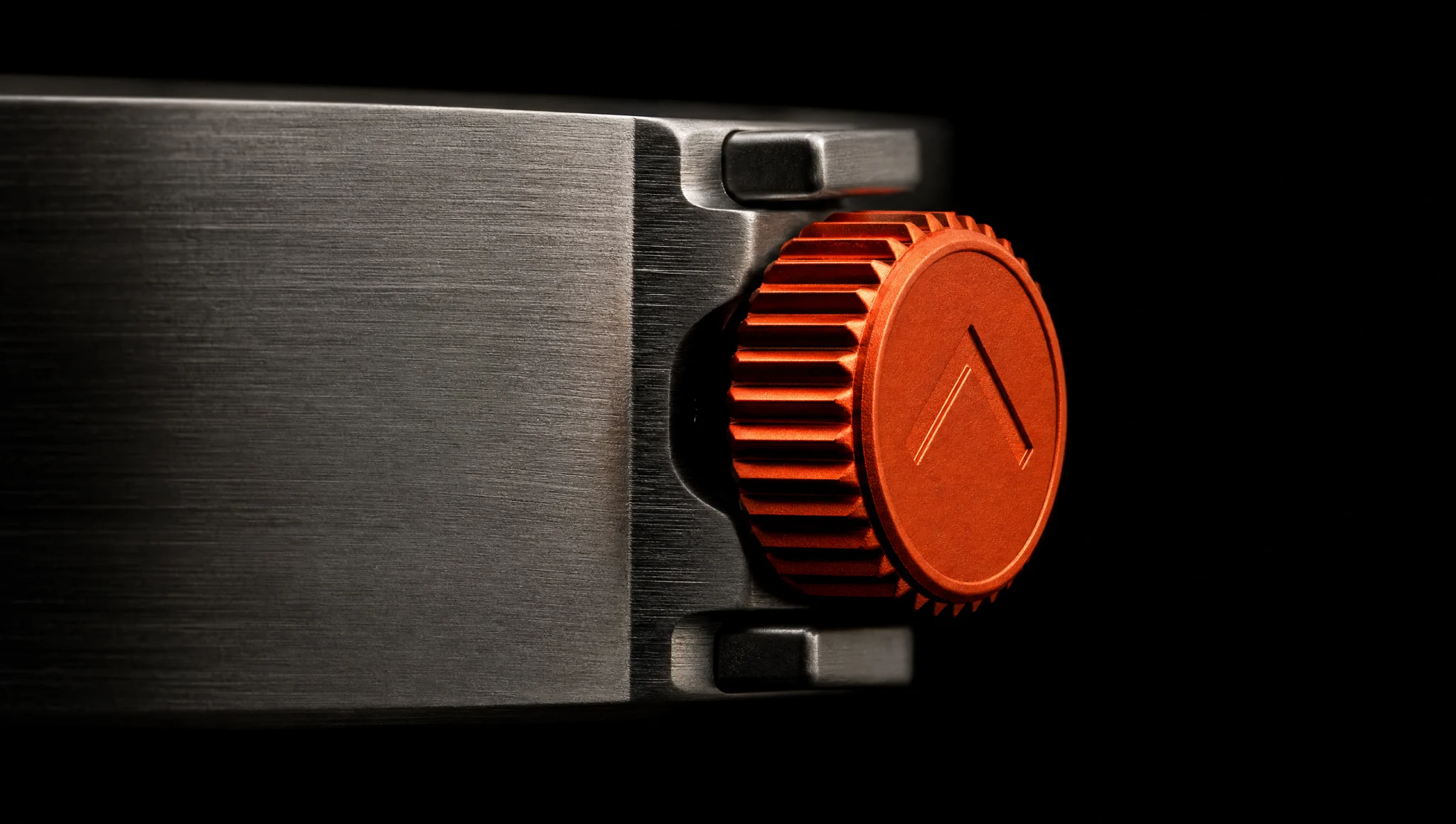
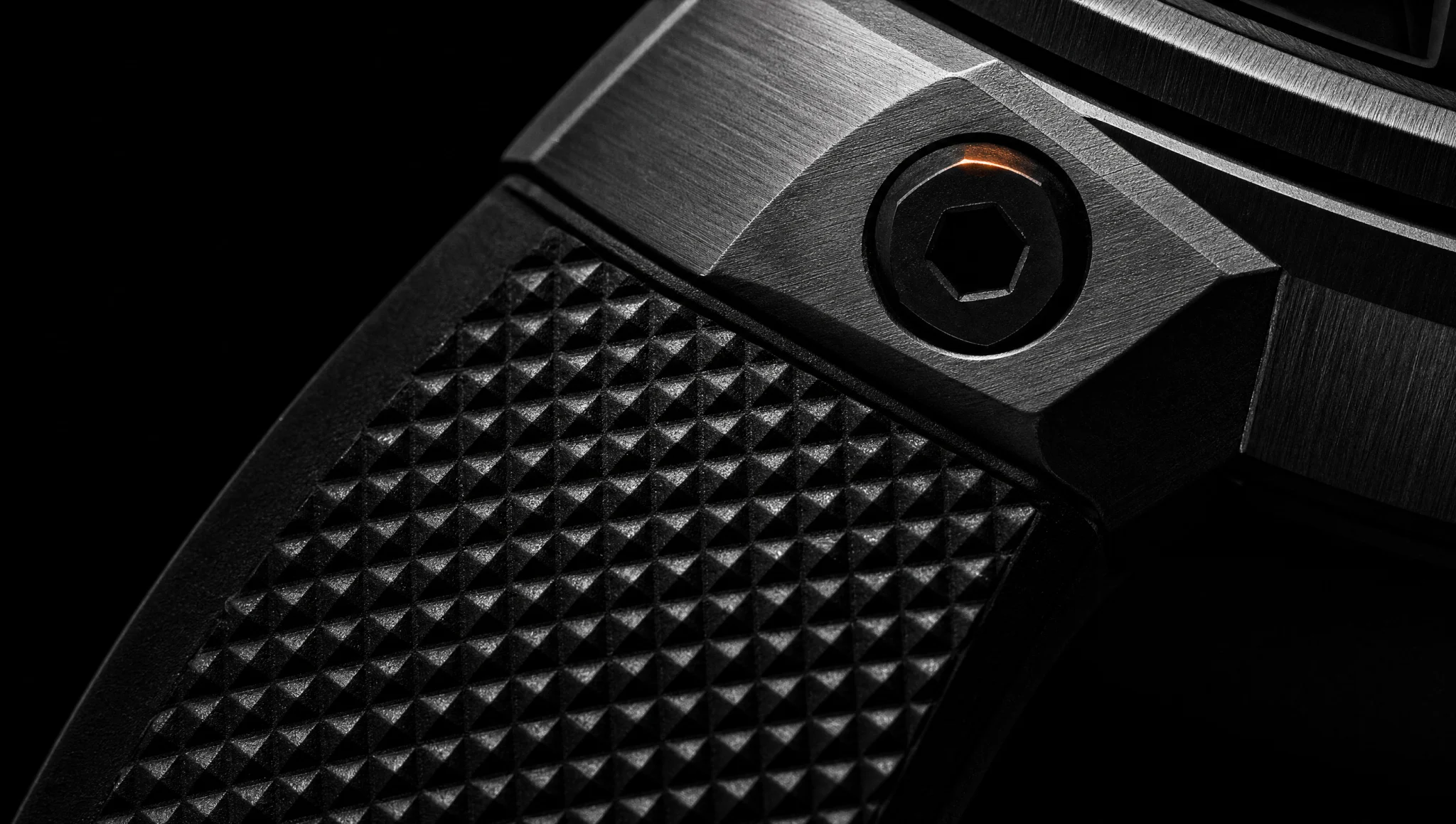
The strap bolts to the case. Two hex fasteners in the same grade-5 titanium pass through the lug and thread into the case body, so a torn strap is a two-minute job at base camp with a 2 mm key rather than a watch that goes back to a workshop.
Ascent profile
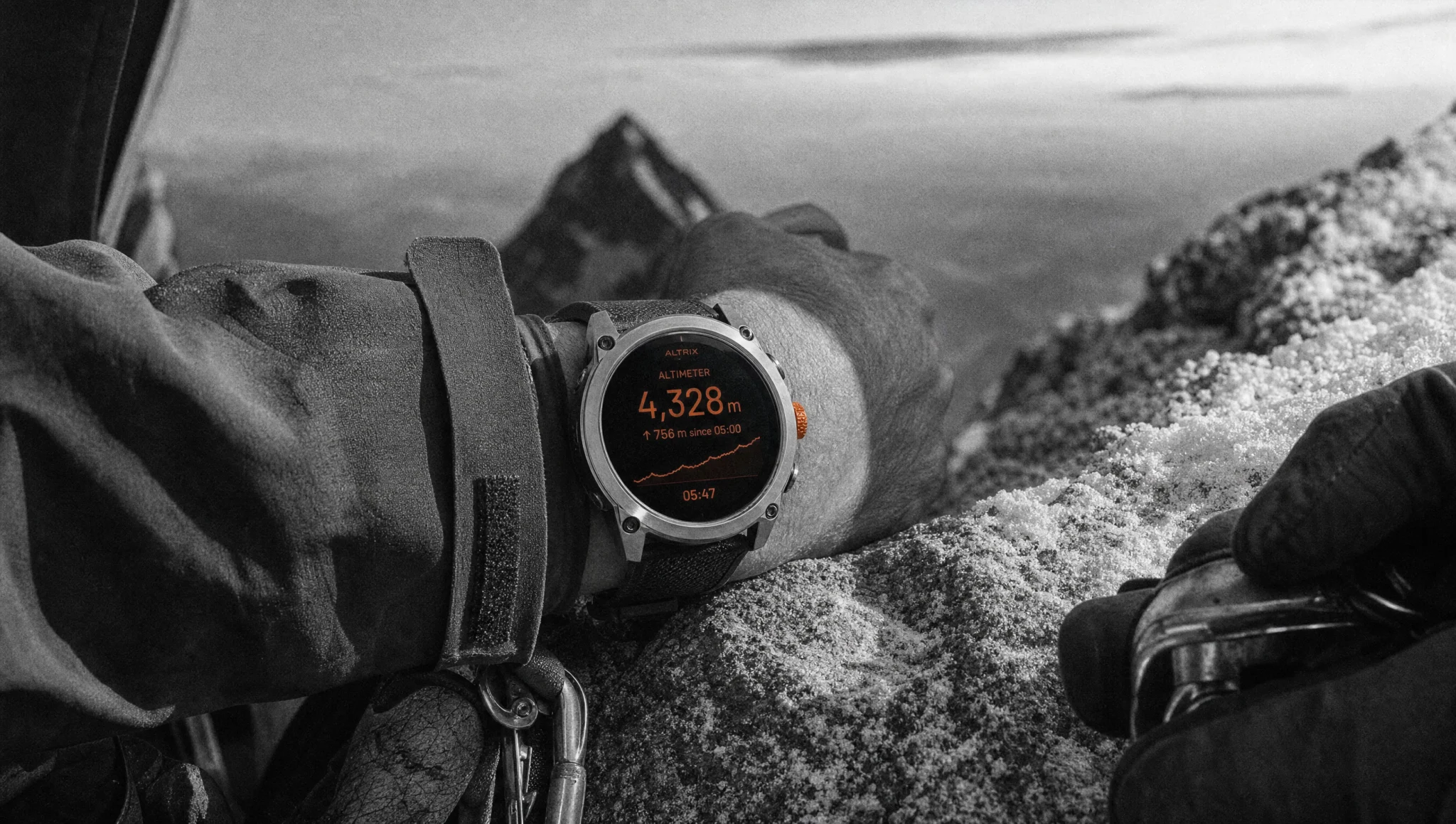
The altimeter is the last instrument to lie. A sealed barometric cell is cross-checked against dual-frequency GNSS on every sample, so the ascent rate read off the ridge is the ascent rate climbed — not a smoothed guess made for you at sea level.
Capability
Nothing here is a companion feature. Every subsystem runs on the watch itself, with no phone in the loop and no cell service assumed, because above the last camp neither one of them is coming with you.
Positioning
01
L1+L5
Two frequencies, one fix. The second civil band rejects the multipath a rock wall throws back at a single-band receiver, so the track logged inside a couloir is the line that was actually climbed.
Altimetry
02
±1m
Pressure first, satellites second. A sealed barometric cell resolves a single metre of gain and recalibrates against GNSS altitude at every rest, so the ascent total is honest by the time it is written down.
Autonomy
03
120h
Five days between charges. Expedition mode drops sampling to a one-second cadence and hands the load back to the solar ring, which carries a summit push and the long descent that follows it.
Thermal
04
−41°C
Qualified as one assembly. The display driver and the cell are cold-tested together rather than separately, so the screen still redraws at the temperature where a battery would normally have stopped answering.
Legibility
05
2000nit
Readable against glacier glare. Peak brightness is held for the whole daylight range and the altimeter face falls back to a high-contrast layout, so a reading can be taken through goggles without stopping to shade the dial.
Specification
Nothing on this sheet was measured at sea level. Each number below was re-verified on the 2026 Khumbu traverse — at altitude, in the cold, on a wrist — and rewritten wherever the mountain disagreed with the bench.
Colourway
The chassis never changes. Grade-5 titanium, sapphire crystal and the same dual-frequency fix in either finish — the strap is the only decision left to you, and it is the one you wear for 120 hours at a stretch.
Pre-order
Summit Series 03 opens for pre-order today. Allocation is held to the first production run, every watch ships from Chamonix in March, and each one carries a five-year expedition warranty that covers everything except the summit itself.